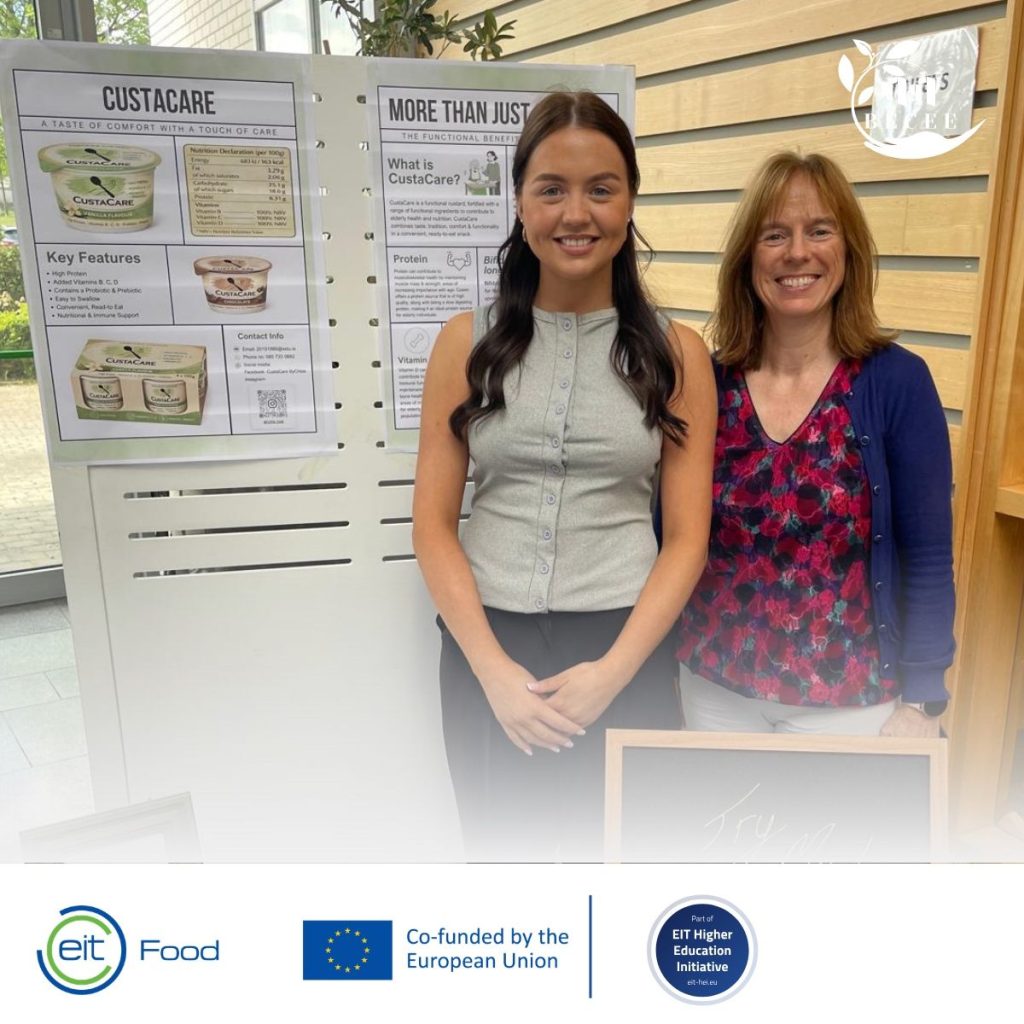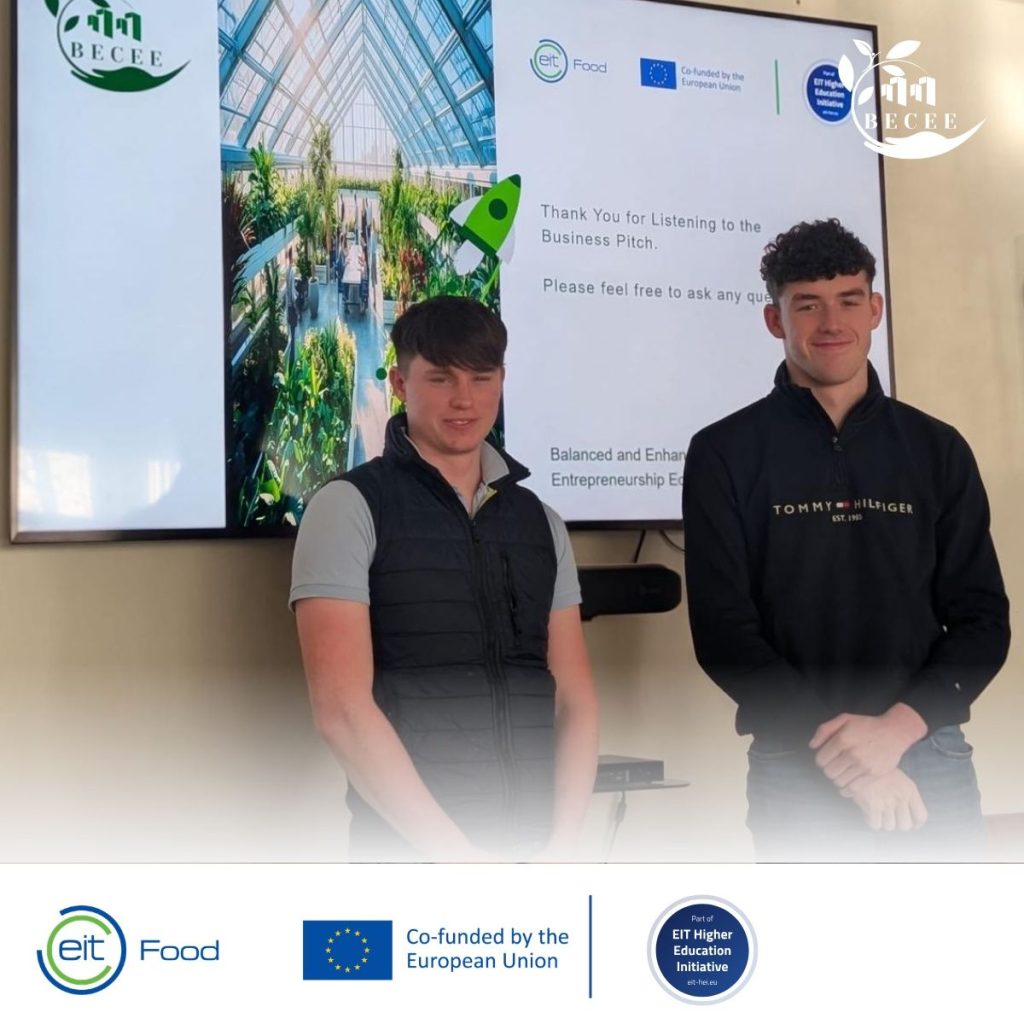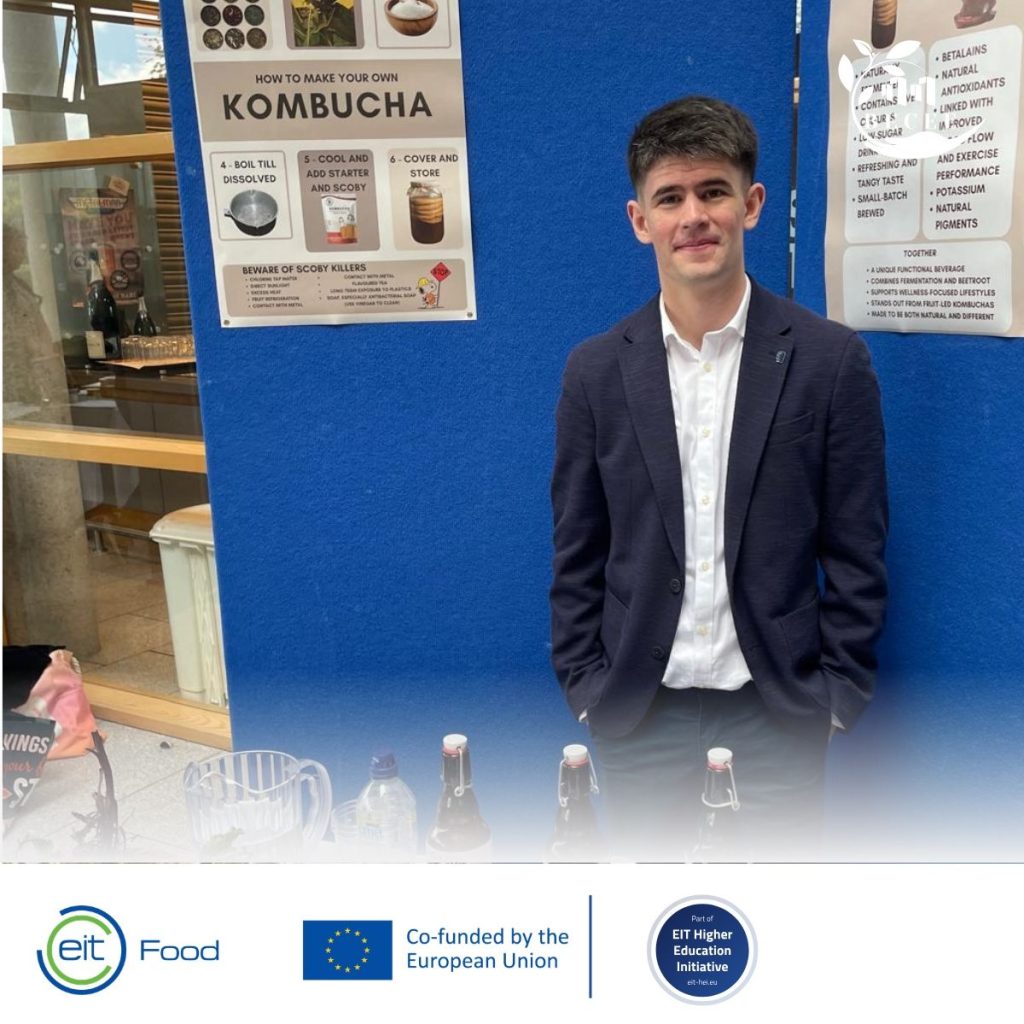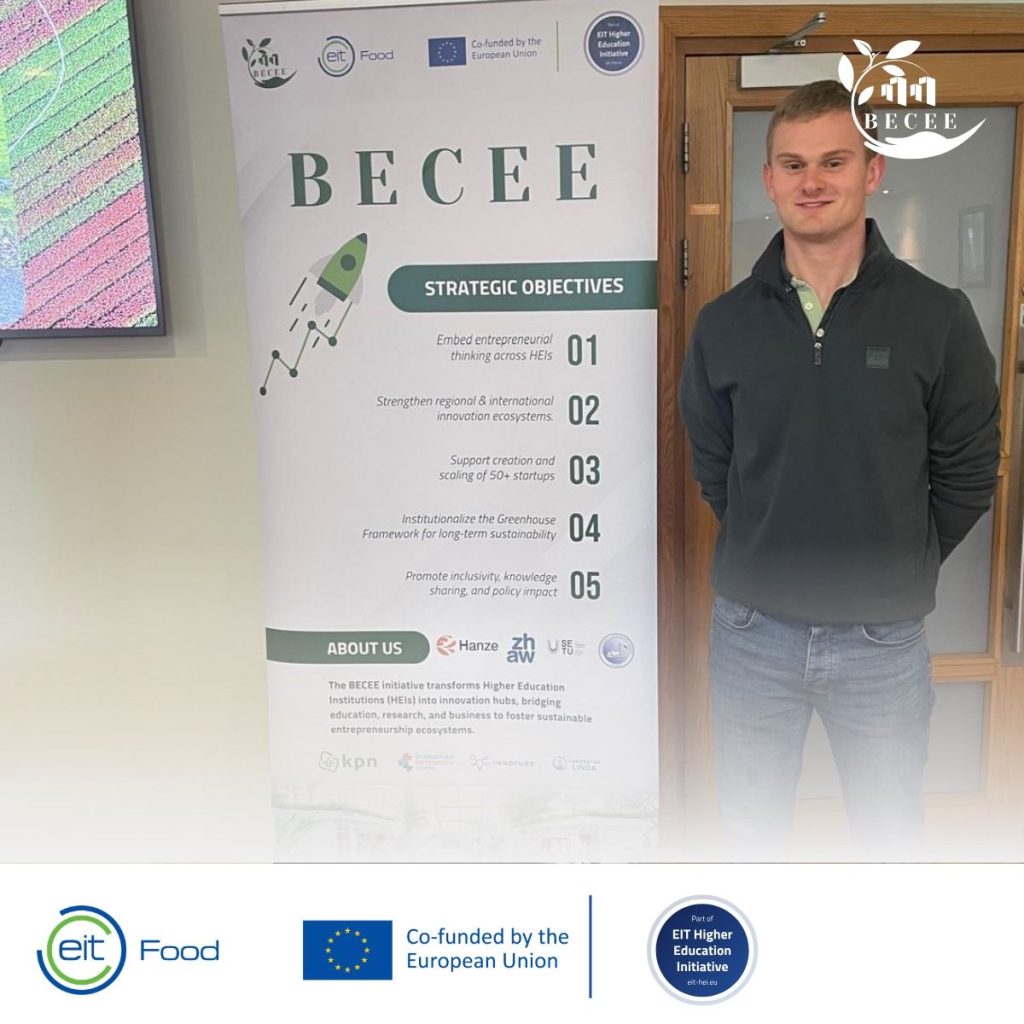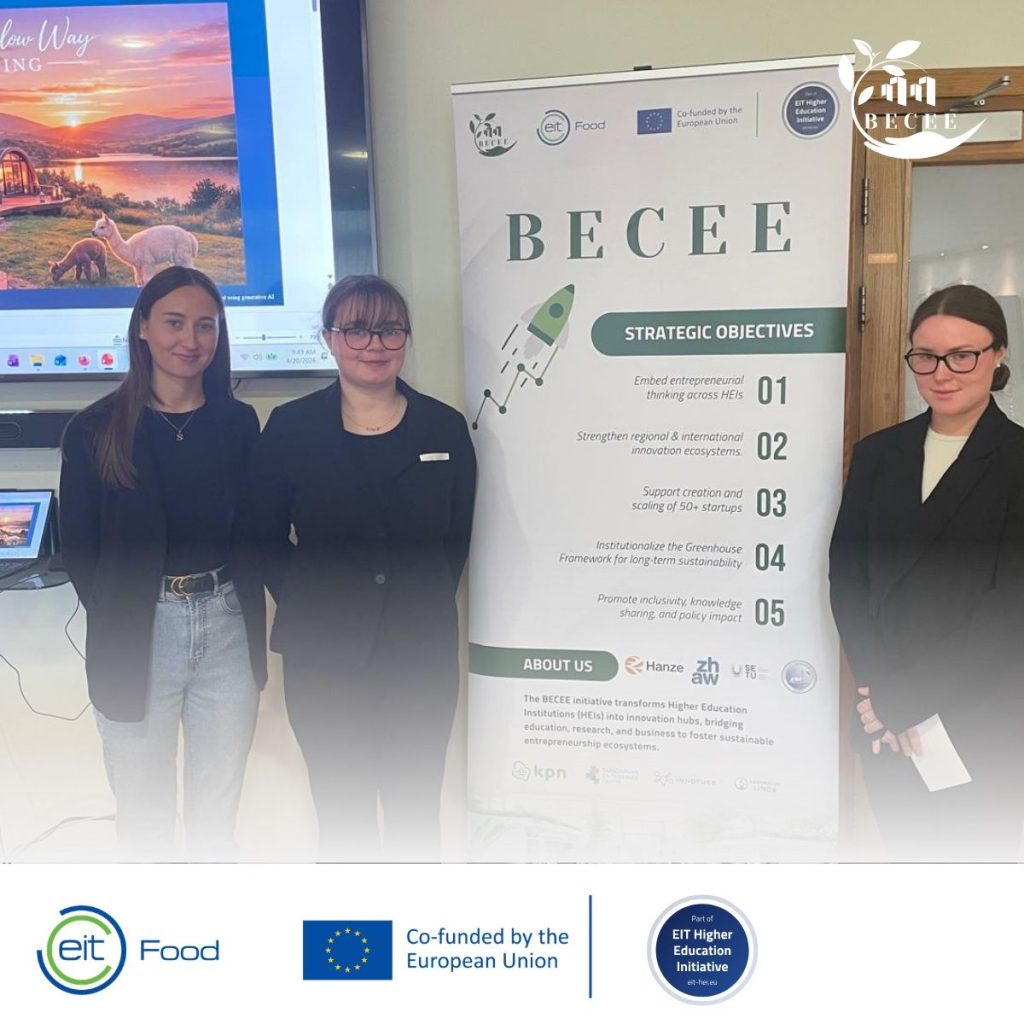


Entrepreneurship education is most effective when students are given the opportunity to apply their knowledge in real-world contexts. At South East Technological University (SETU), this philosophy was clearly demonstrated through the BSc (Hons) Agricultural Science Student Business Pitches, an inspiring event that showcased the creativity, innovation, and entrepreneurial potential of the next generation of agricultural professionals.
Organised within the framework of initiatives supported by the European Institute of Innovation and Technology (EIT) and aligned with the objectives of the EIT Higher Education Initiative, the activity reflects the growing importance of embedding entrepreneurship and innovation into higher education. By combining academic learning with practical experience, students are empowered to become active contributors to sustainable economic and societal development.
During the event, students presented innovative business concepts designed to address current and emerging challenges within the agricultural sector. Their ideas reflected an understanding of market dynamics, technological innovation, environmental sustainability, and the evolving needs of rural communities. Each business pitch demonstrated not only technical knowledge but also the entrepreneurial mindset required to transform innovative ideas into practical and impactful solutions.
Developing a successful business concept involves much more than creativity alone. Throughout the process, students conducted market research, identified customer needs, evaluated competitors, developed value propositions, explored financial viability, and designed implementation strategies. These activities enabled participants to strengthen critical entrepreneurial competences while gaining valuable experience in business planning, strategic thinking, and innovation management.
The Business Pitch event also provided students with an opportunity to develop essential transversal skills that are increasingly valued by employers and innovation ecosystems. By presenting their ideas before academic staff and peers, participants enhanced their communication, leadership, teamwork, problem-solving, and public speaking abilities. Receiving constructive feedback further encouraged them to refine their concepts and strengthen the feasibility of their proposed ventures.
The event highlighted how experiential learning can successfully bridge the gap between theoretical education and practical entrepreneurship. Rather than learning about entrepreneurship solely through lectures, students actively experienced the entrepreneurial process—from identifying opportunities and generating ideas to validating business models and communicating their value propositions.
Through activities such as these, students are encouraged to:
- 💡 Develop innovative business ideas that respond to real-world agricultural challenges.
- 🌱 Integrate sustainability principles into entrepreneurial decision-making.
- 📈 Understand market needs and design viable business models.
- 🤝 Collaborate effectively within multidisciplinary teams.
- 🚀 Build confidence in presenting ideas and engaging with potential stakeholders.
- 🌍 Contribute to regional development through innovation and entrepreneurship.
These outcomes directly support the mission of the BECEE Project, which seeks to strengthen entrepreneurial education across higher education institutions by promoting challenge-based learning, collaboration with external stakeholders, and the development of innovation ecosystems. By creating opportunities for students to engage with practical entrepreneurial experiences, BECEE contributes to preparing graduates who are capable of driving sustainable growth and responding to the complex challenges facing society.
The Business Pitches also reflect the broader ambitions of the EIT Higher Education Initiative, which encourages universities to become innovation-driven institutions where education, research, and entrepreneurship work together to generate societal impact. Through initiatives such as this, SETU continues to foster an educational environment that equips students with the knowledge, skills, and entrepreneurial mindset necessary to become future innovators and changemakers.
Entrepreneurship is not simply taught it is developed through experience, experimentation, collaboration, and continuous learning. The BSc (Hons) Agricultural Science Student Business Pitches provide an excellent example of challenge-based, experiential education in action, demonstrating how higher education can inspire students to transform ideas into innovative businesses with real regional and societal impact.
Congratulations to all participating students for their creativity, professionalism, and entrepreneurial ambition. Special recognition also goes to the academic staff, mentors, and organisers whose guidance and dedication continue to create meaningful opportunities for students to innovate, collaborate, and shape the future of sustainable agriculture.